Introduction
Have you ever wondered how doctors look inside your brain without surgery? Unveiling EEG: Revealing Brain Activity Secrets helps us understand this. EEG stands for Electroencephalogram. It is a safe test that records your brain’s electrical activity. Because our brains control everything we do, knowing how they work is important. EEG tests can show if your brain is healthy or if something is wrong. In this blog, you will learn how EEG works, why it matters, and what to expect during the test.
What is an EEG?
EEG, or Electroencephalogram, is a test that measures brain waves. These waves are tiny electrical signals made by your brain cells. Doctors have used EEG since the 1920s. At first, it helped scientists learn about sleep and epilepsy. Today, EEG is common in hospitals and clinics. It is a simple way to check how your brain works. Because EEG is safe and painless, it is used for people of all ages.
How Does EEG Work?
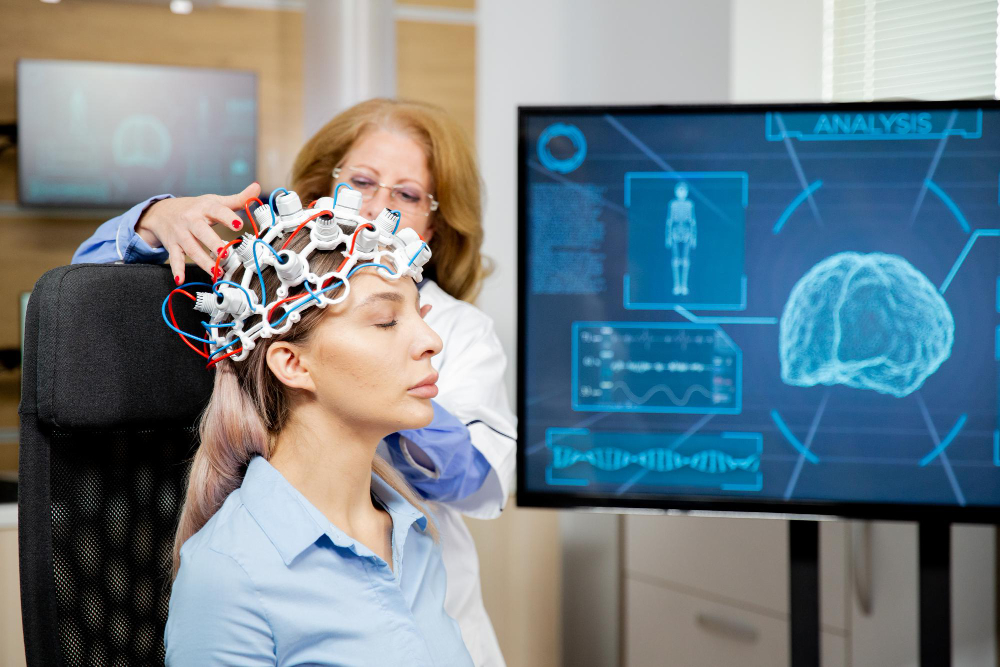
EEG works by using small sensors called electrodes. These are placed on your scalp. The electrodes pick up electrical signals from your brain. Then, a computer records these signals as lines or waves. Each wave pattern tells doctors something about your brain. For example, fast waves may show you are awake. Slow waves may mean you are sleeping. Because EEG is quick and easy, it is often the first test for brain problems.
Why is EEG Important?
EEG is important for many reasons. First, it helps doctors find problems with brain activity. For example, EEG can show if you have seizures, epilepsy, or sleep disorders. It can also help with head injuries or brain infections. Because EEG is safe, it is used for children and adults. In addition, EEG helps doctors check how well treatments are working. Some common uses include:
According to the World Health Organization (WHO), EEG is a key tool for brain health worldwide.
What to Expect During an EEG Test?
Many people feel nervous before an EEG test. However, the procedure is simple and painless. Here is what you can expect:
Because the EEG procedure is easy, you do not need to prepare much. Still, your doctor may give you special instructions, such as washing your hair before the test.
Interpreting EEG Results
After your EEG, a doctor will look at your brain wave patterns. Normal waves mean your brain is working well. Abnormal waves may show a problem, like seizures or other brain conditions. Sometimes, results are not clear. In that case, your doctor may order more tests. Because each person’s brain is unique, only a trained doctor can explain what your EEG results mean for your health.
Safety and Risks
EEG is very safe. It does not use radiation or cause pain. Most people have no problems during or after the test. However, if you have epilepsy, flashing lights during the test may trigger a seizure. The technician will watch you closely to keep you safe. If you have any concerns, talk to your doctor before the EEG test.
Frequently Asked Questions about EEG
Conclusion
EEG is a simple, safe way to check your brain’s health. It helps doctors diagnose and treat many brain conditions. If you have questions about EEG or brain wave monitoring, always consult your doctor.
For personalized advice about EEG and brain health, consult a neurologist at Narayana Neuro Clinic.