A Nerve Conduction Study is a simple test that checks how well your nerves work. Doctors in neurology and neuro surgery often use this nerve test to find nerve problems. If you have numbness, tingling, or weakness, this test can help find the cause. Because it is safe and quick, many people get a Nerve Conduction Study for nerve damage assessment or neurology diagnosis. In this blog, you will learn what a Nerve Conduction Study is, how it works, and what to expect during the process.
What Is a Nerve Conduction Study?
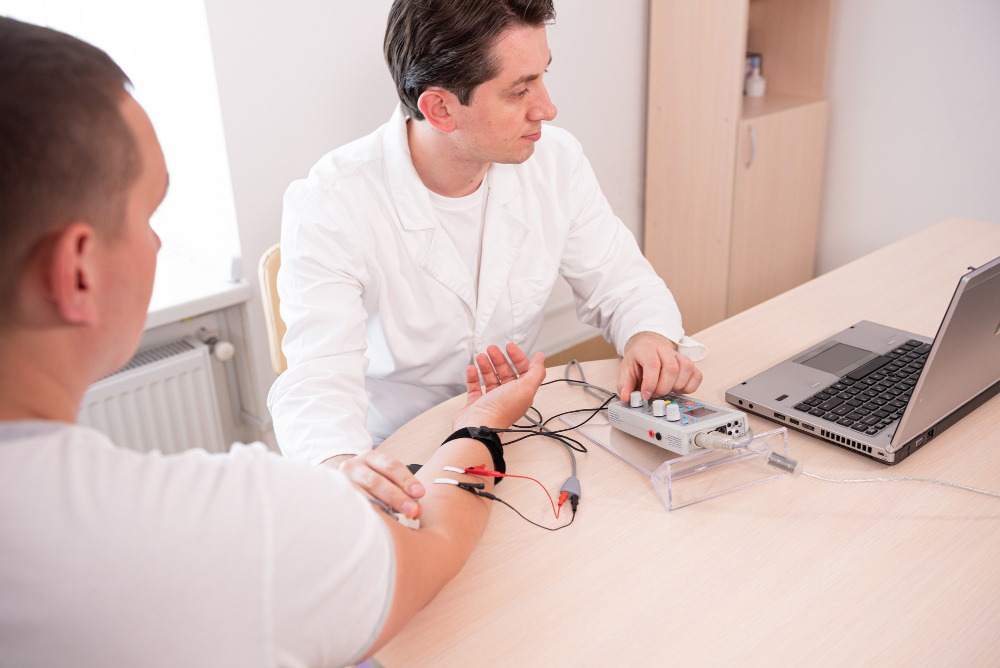
A Nerve Conduction Study, sometimes called an NCS, is a test that measures how fast and strong signals travel through your nerves. During the test, small patches called electrodes are placed on your skin. These patches send tiny electrical signals to your nerves. Then, the doctor checks how your nerves respond. This nerve test helps find nerve damage or problems with nerve function. Usually, doctors recommend it if you have symptoms like numbness, tingling, or muscle weakness. It is often used with another test called electromyography (EMG) for a full nerve and muscle check.
Why Is a Nerve Conduction Study Done?
Doctors use a Nerve Conduction Study to find the cause of nerve symptoms. For example, if you feel tingling or weakness, this test can help. It is also used to check for certain nerve diseases. Common reasons for this nerve test include:
How Is a Nerve Conduction Study Performed?
Before the test, you may be asked to remove jewelry or metal objects. The doctor will explain the steps. First, you will sit or lie down comfortably. Next, the doctor places small electrodes on your skin, usually on your arms or legs. Then, a gentle electrical signal is sent through the nerve. You may feel a quick, mild tingling or twitch. The doctor records how fast and strong the nerve responds. This process is repeated for different nerves. The whole test usually takes 30 to 60 minutes. After the test, you can return to your normal activities right away.
Risks and Safety of Nerve Conduction Study
Most people find a Nerve Conduction Study safe and easy. The electrical signals are very mild and do not cause harm. Sometimes, you may feel slight discomfort or a quick twitch. However, this feeling goes away fast. There is no risk of electric shock. Rarely, your skin may feel sore or red where the electrodes were placed. If you have a pacemaker or other medical device, tell your doctor before the test. Overall, the test is safe for most people, as supported by the World Health Organization and other trusted sources.
Preparing for Your Nerve Conduction Study
To get ready for your Nerve Conduction Study, follow these simple tips:
With these steps, your test will go smoothly and quickly.
Understanding Your Results
After the test, your doctor will review the results. The test shows how fast and strong your nerves send signals. If the signals are slow or weak, it may mean there is nerve damage. Sometimes, the results help find the exact spot of the problem. Your doctor will explain what the results mean for you. In some cases, more tests may be needed to confirm the diagnosis.
Frequently Asked Questions
When to Consult a Specialist
If you have numbness, tingling, or muscle weakness, you should talk to a neurology specialist. Early testing can help find and treat nerve problems. If your symptoms get worse or do not improve, seek medical advice right away. Remember, only a doctor can give you the right diagnosis and treatment plan.
If you have symptoms or concerns, consult a neurology specialist at Narayana Neuro Clinic for personalized guidance.